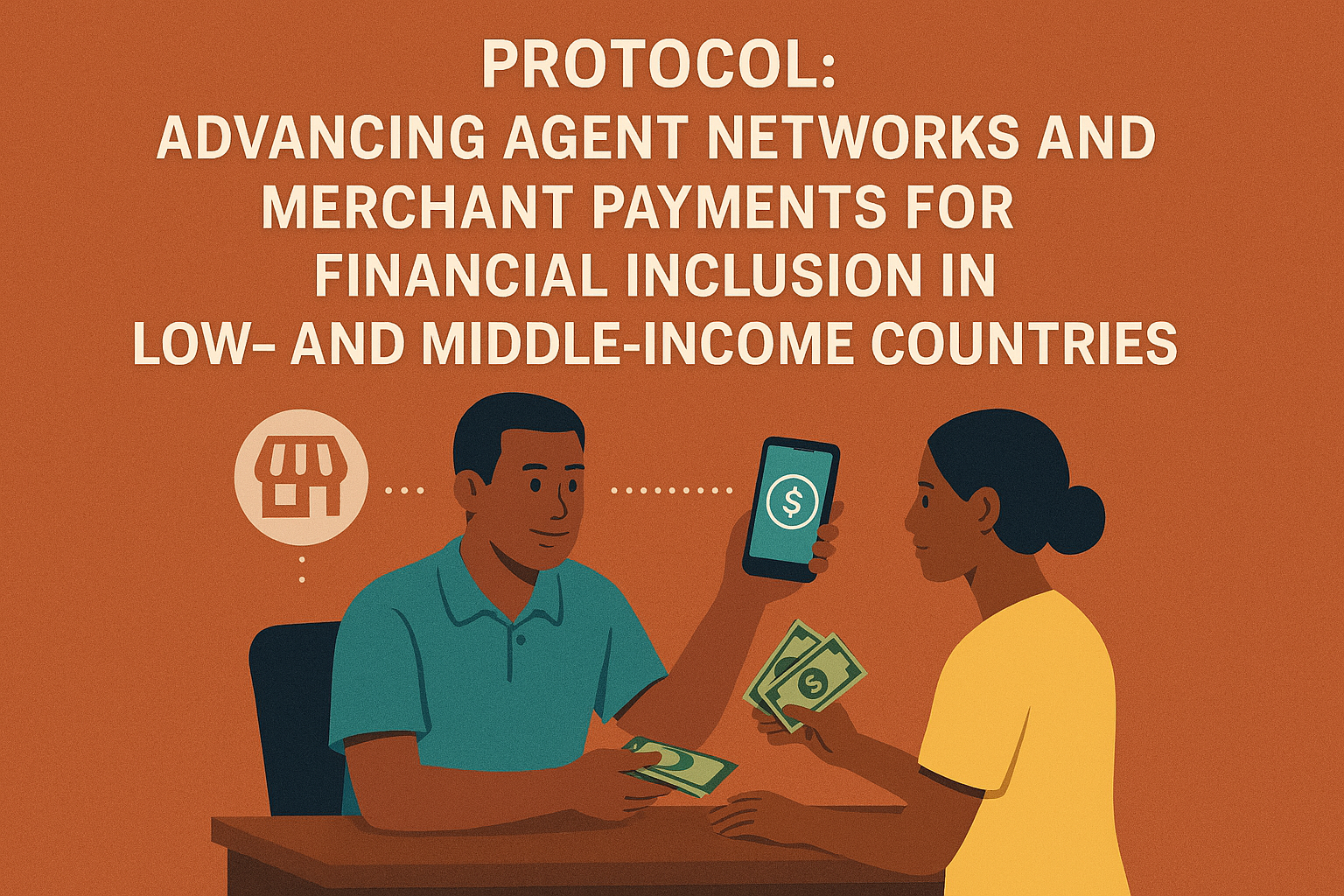
Digital and payment infrastructure — from real-time transfer rails to national switches, digital identity systems and interoperable APIs — increasingly underpins how banking agents, merchants and providers deliver services in low- and middle-income countries.
As mobile money, biometric onboarding and interbank switches scale, the operational stability of these systems (transaction success, downtime, processing speed and connectivity) becomes as consequential for financial inclusion as access itself.
Supply-side actors — agents, merchants, aggregators and providers — are the operational backbone through which these technologies reach end users, yet their experience of system reliability is comparatively underexamined relative to consumer-facing adoption research.