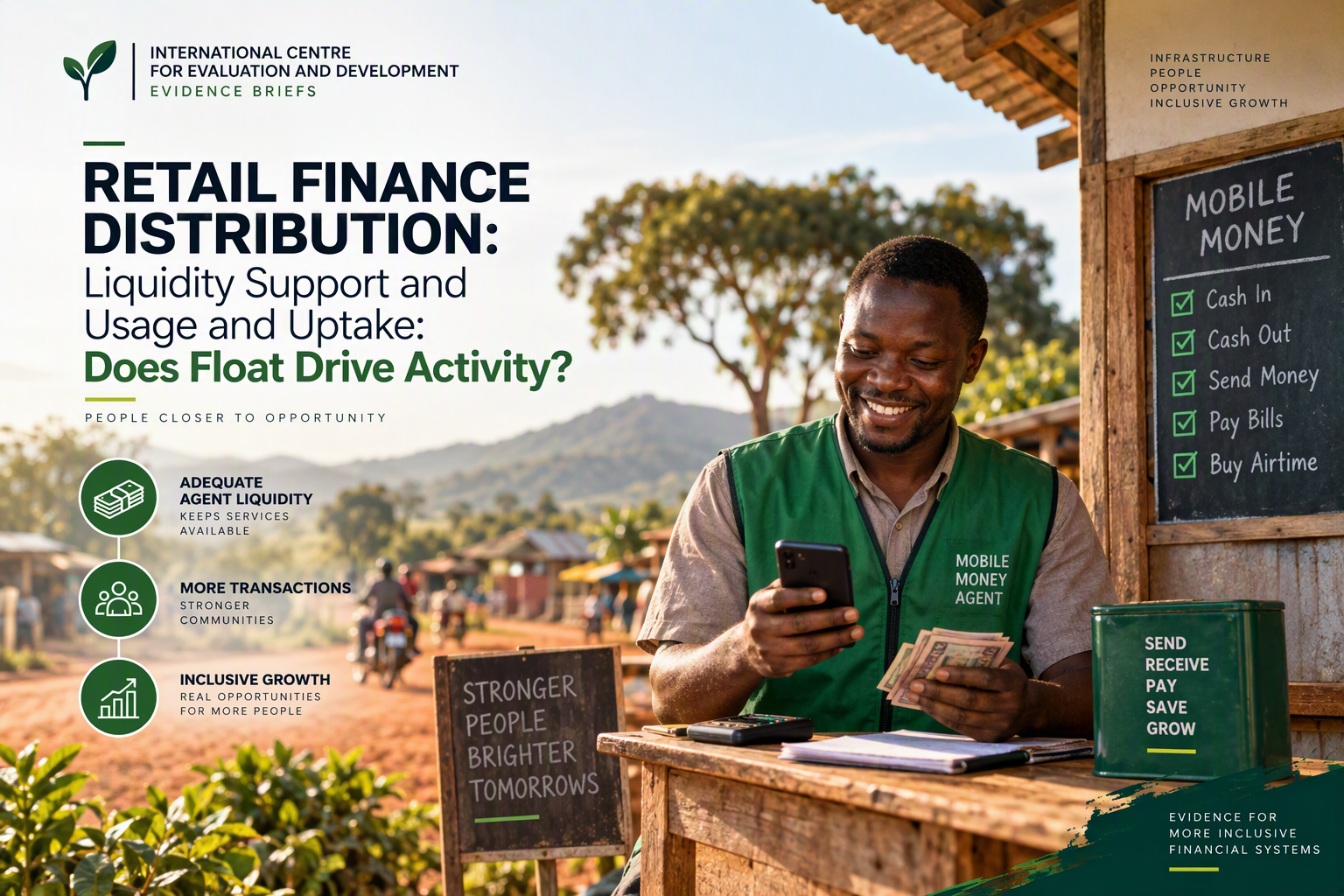
Mobile money agents are a critical channel for delivering financial services, particularly in underserved and rural communities. Evidence from Ghana’s roving-agent model shows that agents facilitate transfers, deposits and withdrawals, and that communities without agents face real barriers to financial transactions.
Agent liquidity is identified in that work as one of the operational constraints that can discourage participation in underserved markets. In Malawi, agent illiquidity is similarly identified as a challenge to expanding mobile money networks, alongside training costs and other regulatory and operational constraints (Buckley et al., 2015).
This brief examines what the evidence establishes — and does not establish — about the effect of liquidity support on user activity and transaction frequency.