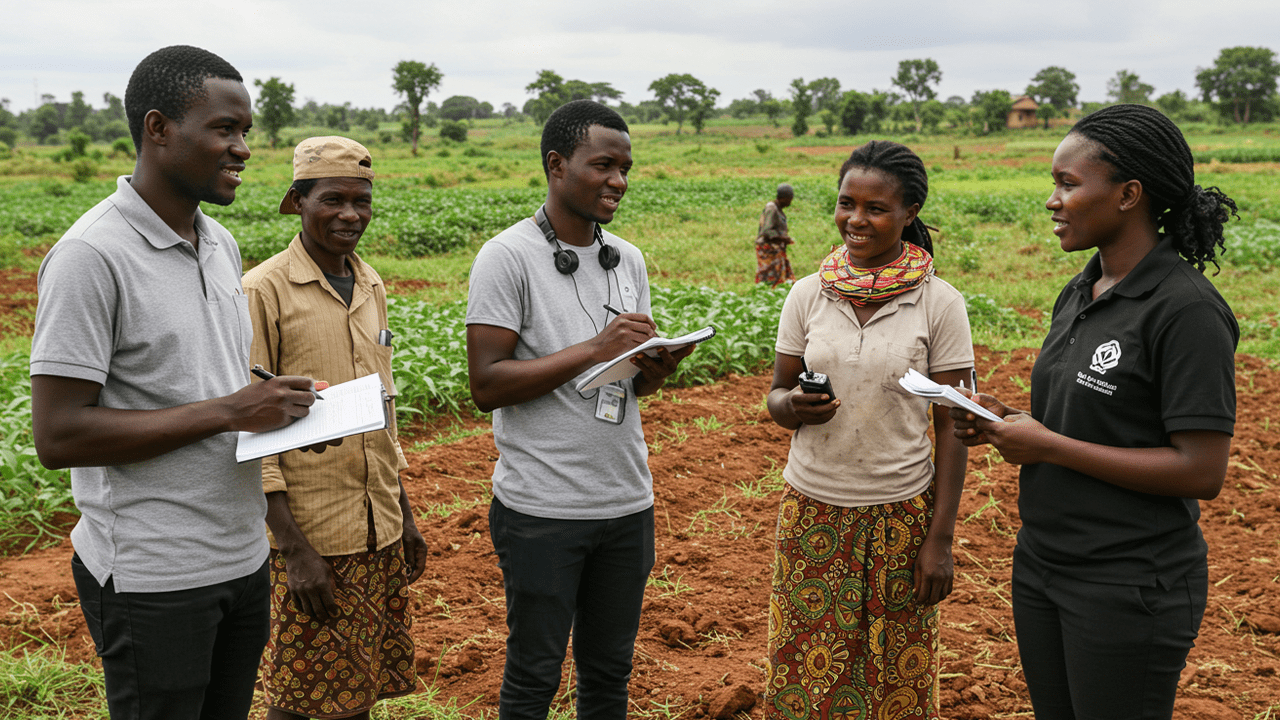
In 2025, the International Centre for Evaluation and Development (ICED) strengthened its leadership in advancing Africa’s evidence ecosystem through rigorous research, capacity strengthening, and policy engagement. Working across priority sectors-including climate adaptation, governance, gender equity, financial inclusion, youth economic empowerment, and health-ICED generated and promoted the use of evidence to inform inclusive and sustainable development.
During the year, ICED produced more than 30 evidence products, engaging over 500 stakeholders across Africa. The Centre trained more than 100 researchers in Evidence and Gap Maps (EGMs), systematic reviews, and locally led evaluation approaches, reinforcing African leadership in evidence generation and use. Policy engagement remained central, with ICED convening the 10th Evidence to Action (E2A) Conference, which brought together 512 delegates from 30 countries, and supporting governments to integrate evidence into policy and programme decision-making.
Strategic partnerships continued to expand ICED’s impact, including leading a consortium selected as a Mastercard Foundation Impact Partner Organization (IPO). A key focus in 2025 was turning evidence into action, with the delivery of three Evidence Gap Maps on climate change, inclusive governance, and women’s economic empowerment. ICED also built research and evaluation capacity across eight African countries and generated early evidence on youth-led indigenous enterprises in East Africa.
Overall, ICED’s work in 2025 underscores its commitment to locally led, policy-relevant, and inclusive research-transforming evidence into actionable insights that strengthen institutions and improve lives across Africa.