


The International Centre for Evaluation and Development (ICED) leads a consortium with the African Population and Health Research Center (APHRC) and TANGO International serving as a Mastercard Foundation Impact Partner Organization (IPO).
The consortium provides strategic, technical and learning support across the Foundation's various platforms, helping strengthen impact, evidence use, adaptive management and evaluation practice. Our work is grounded in systems thinking, youth agency, local context and evidence-informed adaptation.
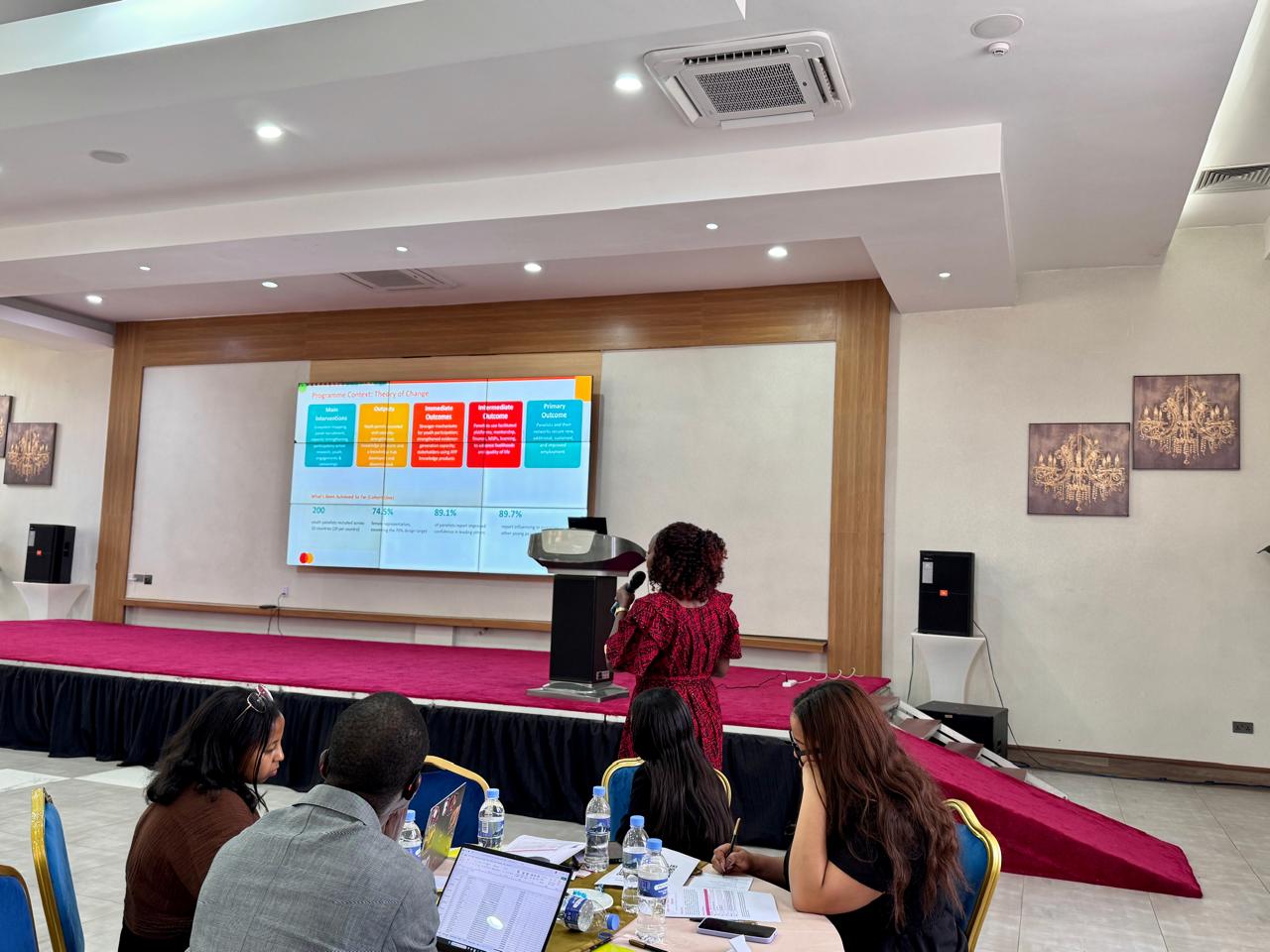
Program Support: We support the Foundation and its partners to strengthen how programs are designed, planned and adapted. This includes Theory of Change and impact pathway development, strategic and intervention design, systems and ecosystem analysis, MEL and impact frameworks, learning agendas and adaptive management, and evidence-informed investment advice.
Impact Technical Delivery: We provide fit-for-purpose evaluation, measurement, data quality and learning support throughout the program cycle. This covers baseline and impact evaluations, developmental and rapid evaluations, Data Quality Assessments (DQAs), impact monitoring and reporting, and evidence synthesis and sense-making. It helps partners understand what is changing, why it is changing, and how evidence can inform action.
Field Building: We contribute to a stronger evaluation ecosystem by advancing innovative approaches, sharing knowledge and building evaluation capacity. This includes transformative evaluation and foresight, Made in Africa Evaluation approaches and products, learning convenings, and peer learning and professional development.


Agent networks and mobile money are transforming financial inclusion for underserved communities. As LMICs shift toward cash-lite economies, digital payments across retail, health, education, and utilities are becoming a priority for policymakers and businesses.


Program Support: We support the Foundation and its partners to strengthen how programs are designed, planned and adapted. This includes Theory of Change and impact pathway development, strategic and intervention design, systems and ecosystem analysis, MEL and impact frameworks, learning agendas and adaptive management, and evidence-informed investment advice.
Impact Technical Delivery: We provide fit-for-purpose evaluation, measurement, data quality and learning support throughout the program cycle. This covers baseline and impact evaluations, developmental and rapid evaluations, Data Quality Assessments (DQAs), impact monitoring and reporting, and evidence synthesis and sense-making. It helps partners understand what is changing, why it is changing, and how evidence can inform action.
Field Building: We contribute to a stronger evaluation ecosystem by advancing innovative approaches, sharing knowledge and building evaluation capacity. This includes transformative evaluation and foresight, Made in Africa Evaluation approaches and products, learning convenings, and peer learning and professional development.

Program Support: We support the Foundation and its partners to strengthen how programs are designed, planned and adapted. This includes Theory of Change and impact pathway development, strategic and intervention design, systems and ecosystem analysis, MEL and impact frameworks, learning agendas and adaptive management, and evidence-informed investment advice.
Impact Technical Delivery: We provide fit-for-purpose evaluation, measurement, data quality and learning support throughout the program cycle. This covers baseline and impact evaluations, developmental and rapid evaluations, Data Quality Assessments (DQAs), impact monitoring and reporting, and evidence synthesis and sense-making. It helps partners understand what is changing, why it is changing, and how evidence can inform action.
Field Building: We contribute to a stronger evaluation ecosystem by advancing innovative approaches, sharing knowledge and building evaluation capacity. This includes transformative evaluation and foresight, Made in Africa Evaluation approaches and products, learning convenings, and peer learning and professional development.







.png)


