

Seven speeches. Seven perspectives. One shared conviction — Africa's evidence ecosystem must be reimagined from the ground up. From the opening address to the closing keynote, the E2A 2026 Conference brought together heads of government, researchers, policymakers, and development practitioners to speak candidly about evidence, power, and transformation. Read the key takeaways from every major speech.
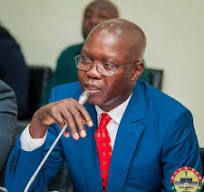
First Deputy Speaker, Parliament of Ghana
Delivered a powerful address on how legislative leadership can drive national development and embed evidence into parliamentary policymaking across West Africa.
"Parliamentary decision-making must be rooted in rigorous evidence to ensure that laws and public policies truly serve the people."
Strengthening institutional capacity within parliament to analyze and utilize evidence-based research.
Building bipartisan consensus around evidence-informed policy frameworks for long-term national growth.
Promoting transparency, public accountability, and legislative oversight across government ministries.

Deputy Spokesperson for the President of the Republic of Ghana
She walked in from the room where decisions are actually made — and gave the most candid government perspective of the conference.
"Evidence is one voice in that room — and not always the loudest. I say this not to be dismissive of the research community, but because if we are serious about making evidence matter more, we must begin by understanding the environment in which decisions are actually made."
Three persistent gaps hold evidence back in government: a timing gap, a translation gap, and a trust gap.
Ghana's administration has committed to embedding evidence reviews in major policy proposals and building feedback systems across ministries.
"Evidence plants seeds that take time to grow. Do not mistake absence from the headline decision for absence from the policy process."

Former Prime Minister, Guinea • ICED Board Member
The most quoted speaker of the conference. He opened with a farmer in a Rift Valley field and closed with a charge that left the room changed.
"Africa holds sixty percent of the world's uncultivated arable land, and somehow remains a net food importer. That is not an agronomy problem. That is an evidence-to-action problem."
Four structural failures hold Africa back: the scalability gap, institutionalisation without commitment, technology serving tools, and Africa absent from AI.
Five structural shifts are needed — from replication to contextualised scaling, and from documentation to institutionalisation.
"Africa does not need better evidence about its potential. Africa needs evidence ecosystems that are African-owned, institutionally sustained, and politically backed."

Governor, Kisumu County • Professor of Political Science
He closed the conference with a rallying call that was equal parts academic rigour and moral urgency. The room left with no excuse not to act.
"Evidence without action is just information. Action without evidence is speculation. Progress occurs only when the two become inseparable."
The gap between evidence and action is not a gap in information — it is a gap in institutions. Development fails because institutions fail to learn.
"Projects have beginnings and endings. Systems create continuity. Projects depend on individuals. Systems survive leadership transitions."
The next phase of Africa's evidence journey rests on five pillars: democratise knowledge, institutionalise evidence, elevate African knowledge systems, build a continental pool, and harness technology responsibly.

Government Spokesperson, Republic of Kenya
He brought Kenya's national story to Accra — and introduced a concept that reframed Africa's next chapter: Afro-Pragmatism.
"Perhaps generations from now, people will look back at gatherings such as this one in Accra and say: this was the moment Africa stopped asking for a seat at the table and started helping to design the table itself."
Evidence must eventually find its way into the political kingdom. Kenya's Persons with Disabilities Act 2025 was 20 years in the making.
Afro-Pragmatism: the evolution of Pan-Africanism for the 21st century. It asks what works in our context, for our people, within our institutions.
Evidence is no longer just a policymaking tool — in an age of misinformation, it is also a public trust tool.

Director, Giving Evidence
She came with data on how charities and funders actually use evidence — and named the six barriers standing in the way with refreshing bluntness.
"Facts not opinions." — Inscribed above the Kirkaldy Testing Works, London. The oldest reminder that this conversation has always mattered.
Evidence is ultimately aimed at behaviour change — yet most evidence ecosystems stop at production and never complete the cycle.
The three steps that must all work together: find an important question → answer it well → help people understand and use the answer.
Six barriers block evidence-based practice: ignorance, inertia, ideology, incentives, interests, and decision rights.

Economist & Development Expert
He reframed the entire evidence conversation — from "what works" to the harder, more honest question: how, why, for whom, and under what African conditions?
"Every dollar of investment, every programme, every policy should translate into real and lasting improvements in people's lives."
Africa's evidence ecosystem suffers from seven systemic challenges — from less than 1% of GDP going to research, to weak institutional linkages.
The continent has built a strong data bank of "what works" — but hasn't asked enough about causality: how, why, and in which contexts does it hold?
His charge to policymakers: build national MEL systems for government — not only for donors. Support pilots designed to test and adapt.

Executive Director • PASGR
A prominent leader in African agricultural development and policy, driving evidence-based transformation across the continent.
"True transformation in Africa's food systems begins when we trust our own data and empower our local researchers to lead the policy dialogue."
Empowering local researchers is critical to ensuring policy dialogues are rooted in African realities and data.
Trusting our own data is the first step toward building resilient, self-sustaining food systems across the continent.
PASGR continues to lead the way in bridging the gap between social research and governance policy in Africa.

President & CEO, ICED
The man who built E2A set the stakes high from the start — and reminded the room that nine years of this conference is not a tradition. It's proof of concept.
"Africa is ready to move from being a recipient of externally defined paradigms to becoming a global producer and shaper of evidence-informed policymaking."
By 2050, one in four people in the world will be African. A continent of that scale cannot afford weak evidence systems.
Africa already has the ideas, institutions, and talent. What is required now is the courage and coordination to translate evidence into action at scale.
The conference would produce a communiqué, declaration, and synthesis report — shared with governments and regional bodies as a practical roadmap.
The evidence is in the room. It has been documented, debated, and delivered. What comes next is the harder part taking these words back to the ministries, the research institutions, the village councils, and the budget lines where Africa's future will actually be decided.
"The success of this conference will not be measured by presentations, papers or attendance. It will be measured by what changes when we return home."