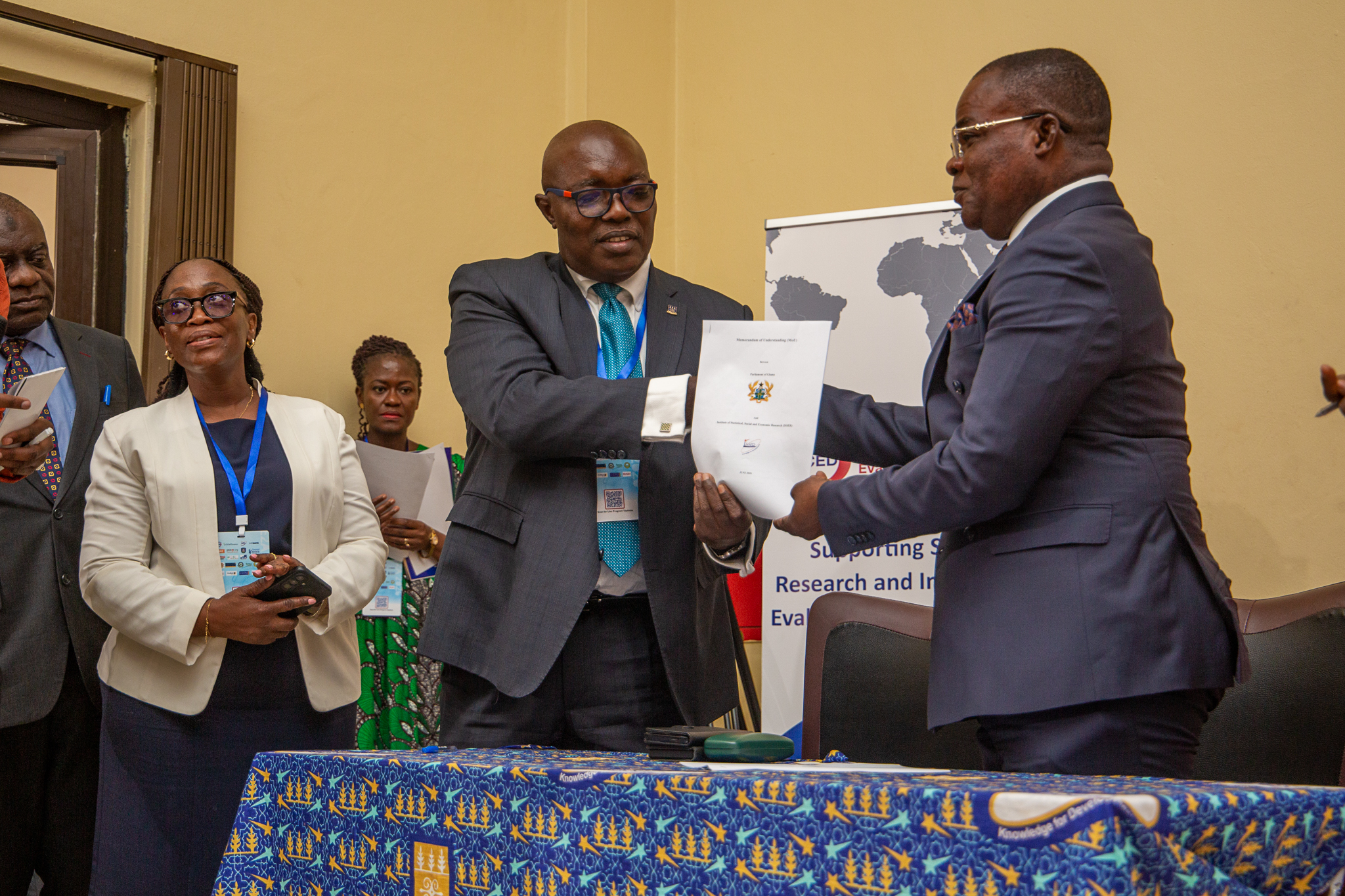
The E2A 2026 Deep-Dive Labs went beyond theory. Over two days, researchers, practitioners, government officials, and civil society actors stress-tested evidence-informed interventions from across the continent — sharing what worked, what didn't, and what it takes to make evidence stick in the real world.
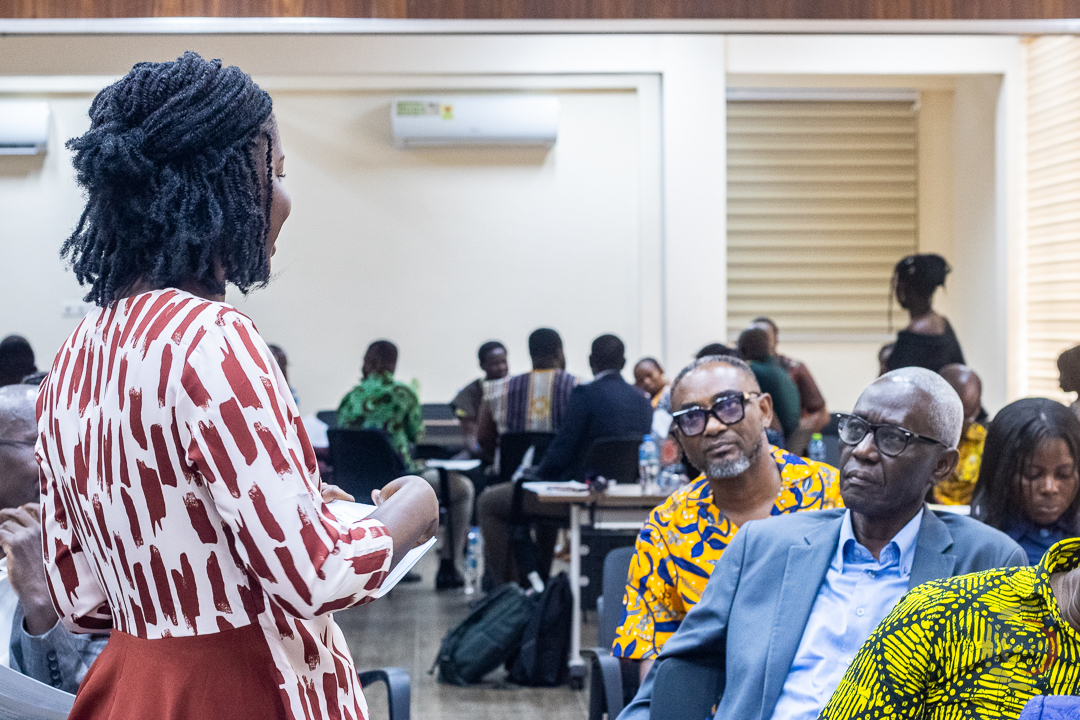
Each lab brought a different lens governance, community, policy innovation, and private sector but every conversation circled back to the same truth: evidence only moves the needle when it is trusted, timely, and built into the systems that make decisions.
ISSERUG Conference Centre
What does it look like when citizens become the evidence? Lab 1 explored how real-time, citizen-generated data — including Afrobarometer surveys spanning 30+ African countries — is reshaping what governments know, and how fast they respond. Sessions showed that when governance systems are built to receive evidence, not just produce it, service delivery improves and accountability follows.
"Strong demand for evidence in policymaking exists — the challenge is building the systems to receive it."
ISSERUG Conference Centre
Sometimes the most powerful evidence is a photograph. Lab 3 showcased communities using visual documentation of broken water systems to hold policymakers accountable — and winning. From women's water governance advocacy to agricultural mechanisation and indigenous knowledge integration, this lab proved that grassroots evidence, when strategically packaged, can change policy. The key ingredient? Capacity building that builds confidence, not just competence.
"When their competences are built, they become confident… we see confidence rather than arrogance as women advocate for their community water resources."
ISSERUG Conference Centre
Four cases. Each one a model for how evidence gets from research to regulation. Lab 4 presented breakthrough work on maternal mortality tracking, antibiotic control policy, AI-supported outcome harvesting, and multi-stage policy engagement models. The common thread? Evidence doesn't change policy on its own — it needs institutional anchors, adaptive management, and continuous stakeholder engagement to survive the journey from data to decision.
"Building credible evidence to underscore the definition of the problem was one of the most important success factors."
ISSERUG Conference Centre
Up to 50% of Northern Nigeria's food is lost before it reaches a market. In Ethiopia, women-led vegetable farms are unlocking smallholder economic power. Across Africa, digital cash systems are quietly rewiring how money moves through food and agriculture value chains. Lab 5 explored how the private sector — from pension funds to digital payments — can become a force for evidence-driven development, when the right trust structures and long-term investment models are in place.
"Alignment of stakeholders is key… especially when there is no trust, you cannot begin implementation effectively."
Four different topics. Four different rooms. But when the synthesis session brought it all together, three conclusions rang true across every lab.
No intervention, however well designed or well funded, succeeds without early and sustained stakeholder alignment. Trust is not a soft factor. It is the foundation on which everything else is built.
One off interventions rarely last. The initiatives that scaled successfully were those embedded within institutions, supported by adaptive management, sustained through multi year financing, and designed to withstand political transitions.
"Being able to clearly define the problem makes it much easier to engage policymakers." — Dr. Andrew Agyei-Holmes, ISSER. Clear problem definition is where evidence informed policymaking either succeeds or falls short.
Browse our gallery of inspiring sessions, dynamic panels, and the vibrant community that made this year’s event a success. See the energy, collaboration, and innovation that define our journeylooking forward to connecting again in 2027!
Click here to browse the Photo Gallery
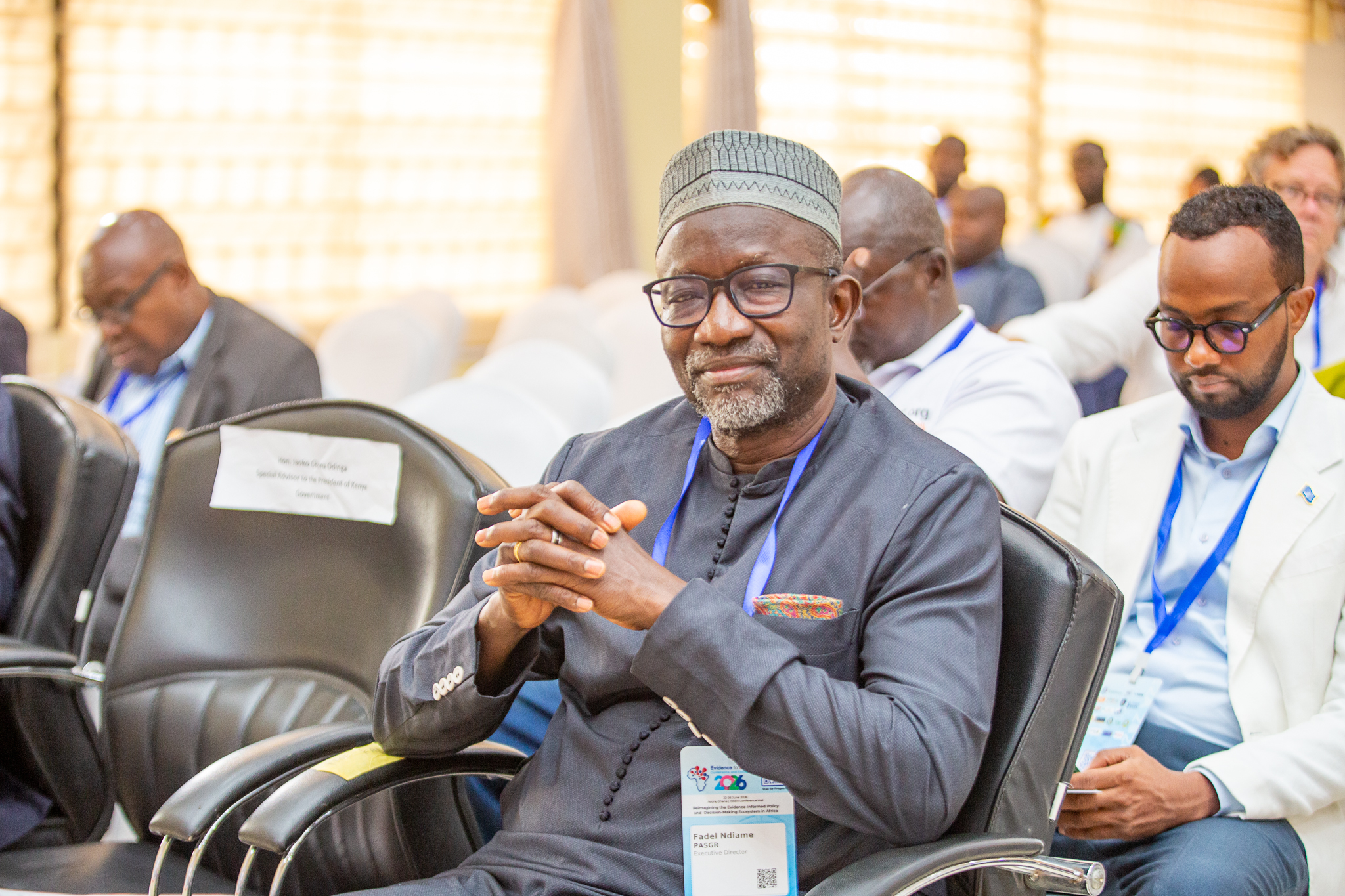
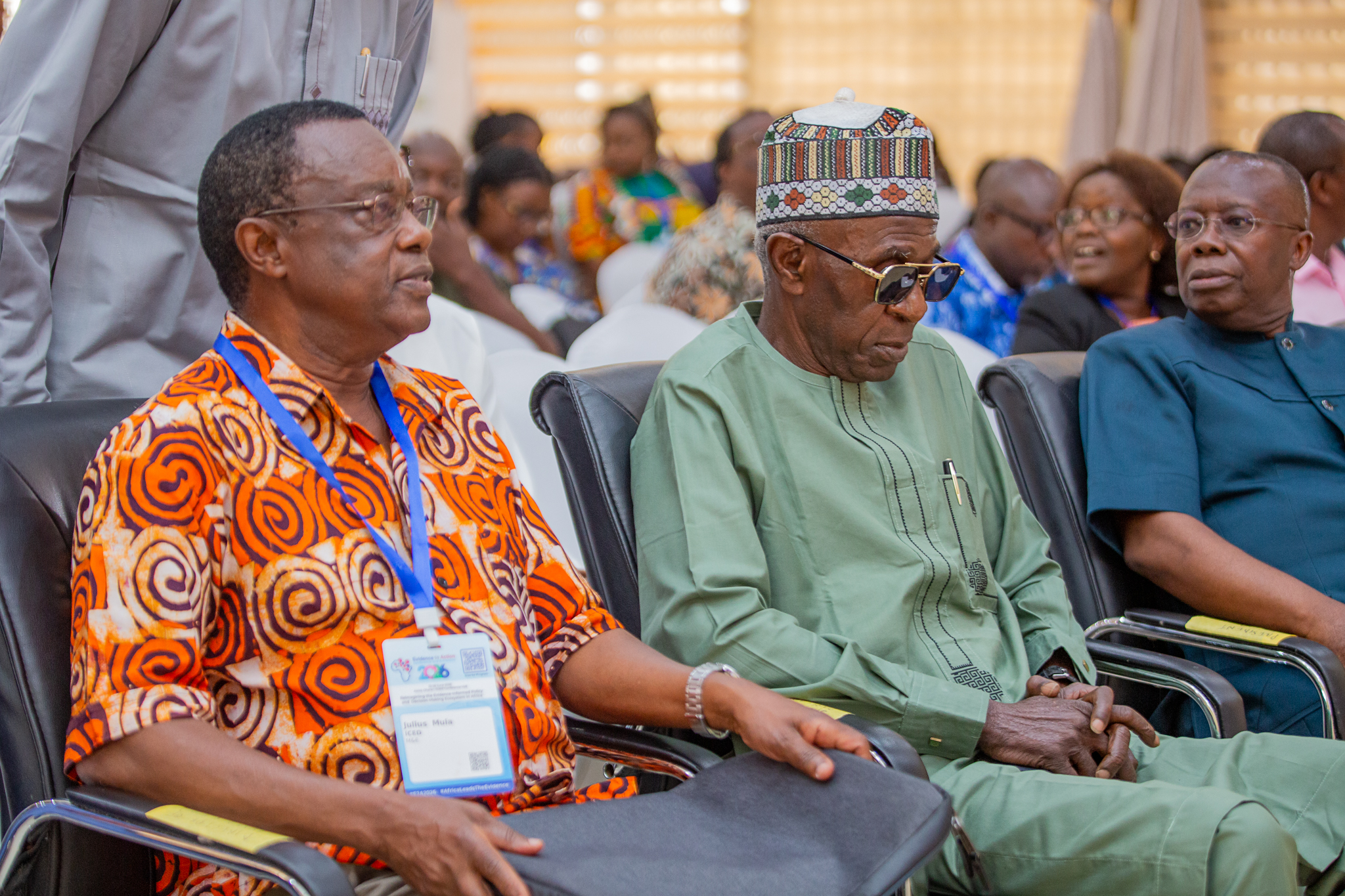

Our dedicated staff, partners, and collaborators made this year’s event a success. Their commitment, expertise, and teamwork brought ideas to life and set the stage for an even more impactful gathering in 2027.
![[team] image of individual team member (for a productivity tools business)](https://cdn.prod.website-files.com/65cbe077fc1d08b98934210b/6a5e672afefb48b98aeaca53__Q7A1042.jpg)

![[team]](https://cdn.prod.website-files.com/65cbe077fc1d08b98934210b/6a5f0a45a4a3c3f3baa3fea3__Q7A1006.jpg)