


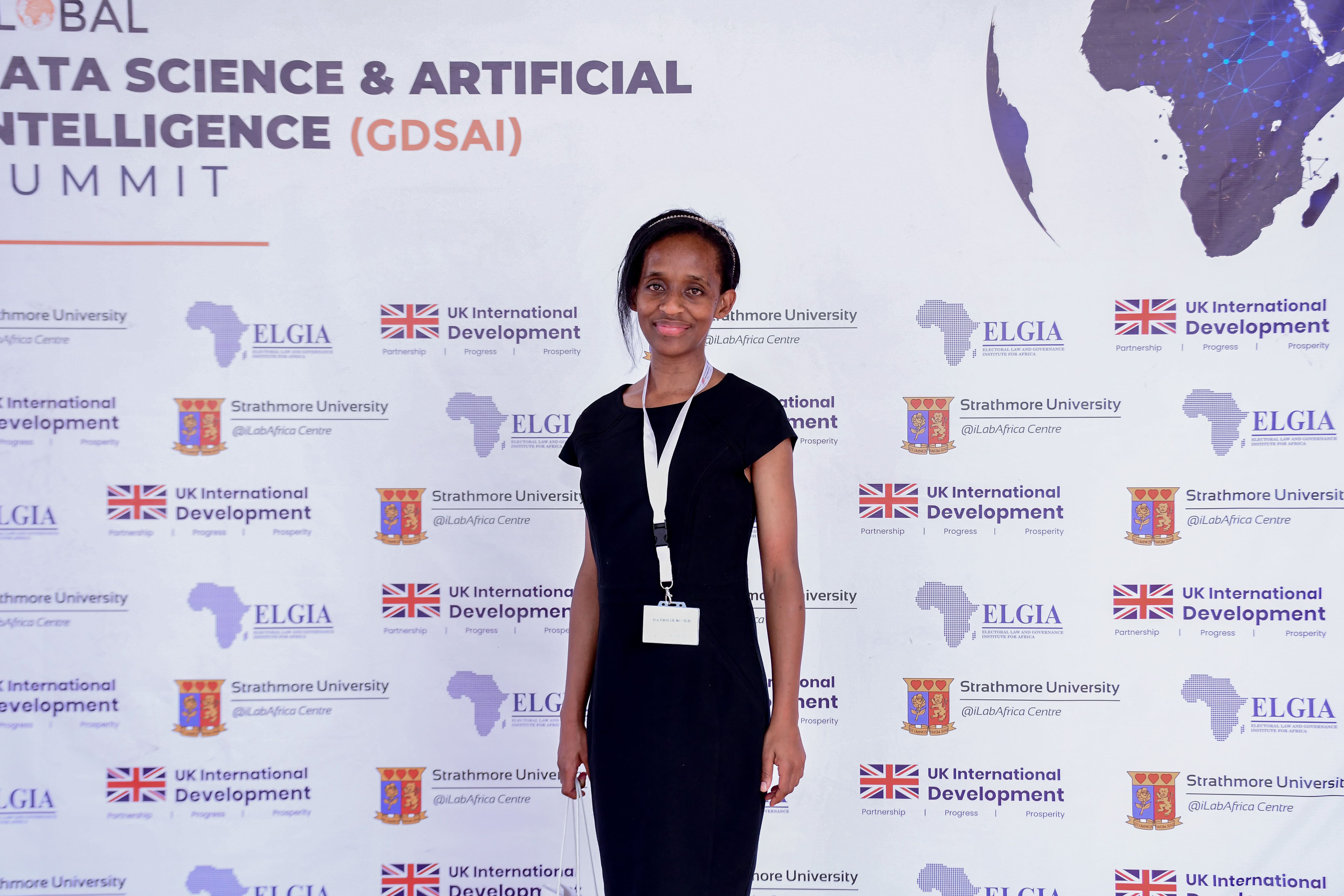
I left the 5th Global Data Science and AI Summit 2026 with one question: why do some AI projects become useful tools while others remain impressive demonstrations?
The answer that stayed with me was simple: AI amplifies the reality that already exists within an organisation. Where strategy is clear, data is reliable and people are skilled, AI can sharpen decisions. Where those foundations are weak, it amplifies errors, bias and poor judgement just as efficiently.
At the International Center for Evaluation and Development, this connects directly to our evidence work. Imagine a policy team trying to answer a pressing question with evaluation reports scattered across folders. Our Evidence Hub, the conversational platform we are building at ICED, can return an answer in seconds. But its value depends on whether the underlying documents are reliable, well labelled and relevant, and whether it shows where an answer comes from and how strong the evidence is. A polished interface cannot rescue weak evidence.
Accountability also stays with people. When an AI-generated summary might shape a policy decision, users must be able to trace each answer back to its source. Citations are not an extra feature; they are the foundation of credibility.
The timing matters. Across the continent, governments are moving from AI curiosity to AI commitment. Rwanda adopted a National AI Policy in 2023, the African Union endorsed a Continental AI Strategy in 2024, and Kenya launched its National AI Strategy in 2025, while countries such as Egypt, Mauritius and Nigeria have set out their own. Strategies set the direction, but foundations decide the destination. Without strong data, clear accountability and credible evidence, these ambitions risk amplifying the very gaps they hope to close.
AI does not create institutional strength. It amplifies what is already there. Our job is to make sure what is there is worth amplifying.
But strong foundations answer only half the question. The other half is: amplified for whom? A system can be well built and still leave people out.
In Part 2, I explore what it takes to build AI for African realities: in our languages, on our terms and with our data.


