


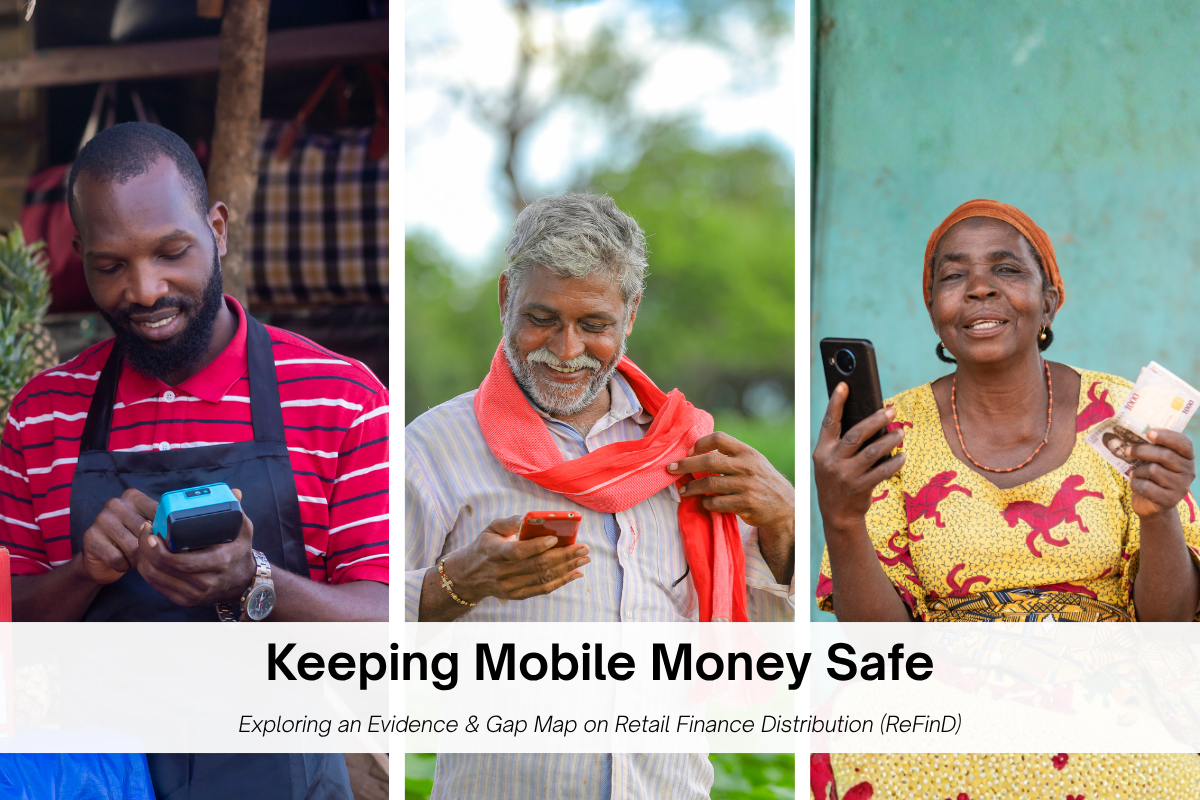
Mobile money has opened the door to financial services for millions of people who were previously left out of formal banking. It allows users to send and receive money, pay bills, save, and carry out other everyday transactions with a basic mobile phone. However, wider access also brings new risks. Fraud, stolen PINs, weak security systems, and poor consumer awareness can cause people to lose money and trust in the service.
Evidence from Kenya, Indonesia, and Burkina Faso shows that mobile money works best when safety is built into the system. Protection is central to whether people feel confident enough to use mobile money and benefit from it.
A 2023 study in Indonesia that surveyed 425 people in Yogyakarta Province found that consumer protection helps connect mobile money use with greater financial inclusion. In simple terms, people benefit more when they believe the service is safe and their interests are protected.
Consumer protection scored 84.44%, while financial inclusion scored 84.01%. Most people used mobile money for payments (56%) and remittances (33%). Far fewer used it for savings and investment (5%), withdrawals (4%), or financing (2%). This suggests that people may need stronger protection and confidence before using a wider range of financial services.
Unstructured Supplementary Service Data (USSD) protocol, also known as “quick codes” or “short codes”, is popular because it works on basic phones without internet access. However, information is not protected from the customer’s phone all the way to the provider’s server. Four-digit PINs can be easy to guess, PIN entries may be visible to people nearby, and default PINs may remain unchanged. Some systems also fail to check whether a transaction message has been altered.
The Indonesia-based study recommends hiding PINs during entry, allowing stronger PINs, requiring periodic changes, blocking obvious choices such as birth years, and protecting information throughout each transaction. It also proposes blockchain-based records to make transactions easier to trace and verify. This solution, however, still needs real-world testing.
The Kenyan case shows that no single measure can keep mobile money safe. M-PESA combined government oversight, identity checks, agent training, transaction limits, and automatic monitoring. Before approval, agents learned how to check identities and spot suspicious activity. They also had to confirm each customer’s identity using a national identity card.
M-PESA limited how much money a person could send in one transaction, use in one day, or keep in an account. At the time of the study, the limits were KES 70,000 per transaction, KES 140,000 per day, and KES 100,000 in an account. An automatic monitoring system also looked for unusual transaction patterns. The study reported that a 2008 audit found minimal fraud. It also noted that M-PESA had reached 15.2 million customers, or 63% of Kenyan adults, and was processing more than two million transactions each day.
The lesson is that different protections must work together. Trained agents improve identity checks, transaction limits reduce potential losses, automated monitoring flags suspicious behaviour, and clear laws guide service providers.
Regulators and mobile money service providers should treat consumer protection as part of financial inclusion. They should strengthen identity checks, train agents regularly, improve PIN and USSD security, monitor suspicious transactions, and set sensible transaction limits. Consumers also need practical education on protecting their PINs, recognising impersonation and phishing attempts, checking transaction details, and reporting fraud.
More research is needed to test whether blockchain improves security, whether consumer education reduces fraud, and which types of agent training work best over time. Researchers should also compare consumer protection rules across countries.
Mobile money can expand financial opportunity, but access alone is not enough. People must be able to use these services without unnecessary fear of fraud or loss. A safe mobile money system therefore depends on shared action from governments, providers, agents, and consumers. When protection is strong, trust grows, and mobile money is more likely to deliver on its promise of meaningful financial inclusion.


